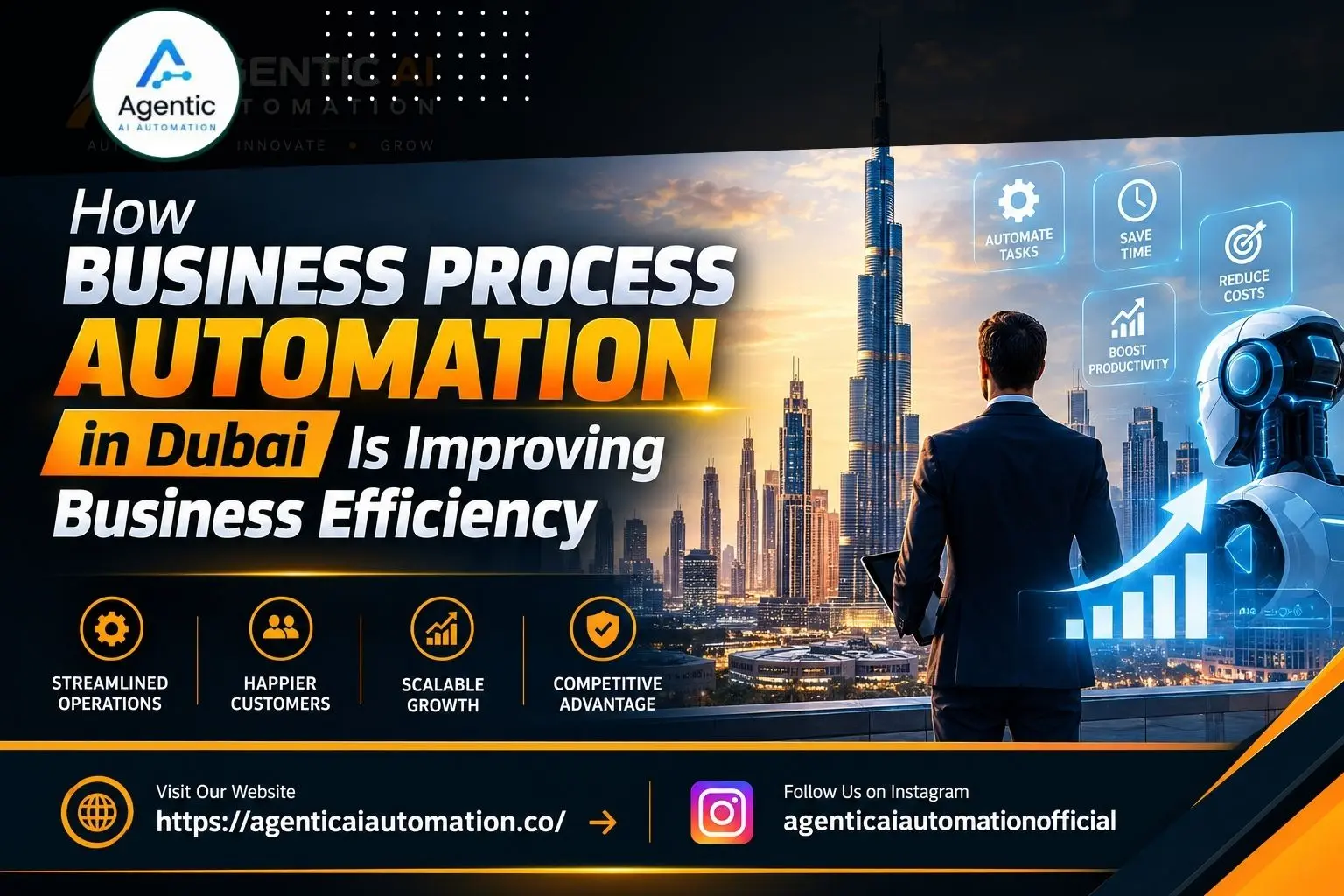
Getting Started with Business Process Automation in Dubai
Ask a Dubai business owner where the week goes, and you will hear the same list. Invoices. Approvals. Visa paperwork. A client who promised to sign on Monday and has gone quiet. None of it is hard. All of it eats time.
That gap is exactly what Business Process Automation in Dubai is closing. Companies hand repetitive, rule-based work to software, and their people go back to work that needs judgment. Big banks and logistics firms started this trend. Now small trading companies, clinics, real estate agencies, and restaurant groups join them.
Here is what automation really does, why Dubai suits it, where the biggest gains show up, and how you can start without burning your budget.
What Business Process Automation Actually Means
Business process automation (BPA) means software runs a task from start to finish with little manual effort. A "process" is any set of steps you repeat: onboarding a customer, approving a purchase order, chasing a late payment.
Take a simple case. A customer fills in a form on your website. Without automation, someone copies the details into a spreadsheet, emails the sales team, and builds an invoice by hand. With automation, the form data lands in your CRM, the right salesperson gets an alert, and the invoice goes out on its own. Nobody touches a keyboard.
Going digital and automating are not the same thing. Scanning a paper form into a PDF is digital. Letting the system read the form, check it, and send it to the right person is automation.
Why Dubai Is a Natural Fit
Few cities push technology as hard as Dubai does. The government built its Paperless Strategy around digital services, so licences, visas, and payments now run through online portals. When regulators work digitally, a company that still runs on paper and long email chains falls behind fast.
Other local factors push in the same direction: • Speed. Customers here expect a reply in minutes, often on WhatsApp. Manual handling cannot keep up.
• Mixed teams. Staff come from dozens of countries and work in several languages. Automated workflows give everyone the same clear steps.
• Compliance. VAT, corporate tax, and payroll rules demand clean records. Software logs every action and rarely forgets a deadline.
• Hiring cost. Another admin hire means salary, visa, insurance, and housing. A workflow that handles the same work costs far less.
Where Businesses Gain the Most Efficiency
You do not need to automate everything. Most firms see the quickest wins in five areas.
Finance and accounting. Software can capture invoice data, match it to purchase orders, and send payment reminders. Accountants stop typing numbers and start reviewing exceptions. Month-end closes get shorter, and fewer errors slip through.
HR and onboarding. A new hire used to mean a stack of forms, several emails, and a trip to three different offices. Now a workflow collects documents, sets up accounts, and tells each department what to do. The new person starts on day one with a laptop that works.
Sales and customer service. Leads get scored and assigned in seconds. Follow-up emails go out on schedule. Chatbots answer common questions at 2 a.m. so your team does not have to.
Operations and supply chain. Stock alerts, purchase requests, and delivery updates can run without a person watching a screen. For a Dubai trading or logistics company moving goods through Jebel Ali, that saves real hours every week.
Documents and approvals. Contracts, quotes, and expense claims often sit in someone's inbox for days. An approval workflow sends each one to the right person, sends a nudge if they stall, and records who said yes.
The pattern is the same everywhere. People spend less time on copy-and-paste work, mistakes drop, and customers get faster answers.
The Next Step: Agentic AI Automation
Traditional automation follows fixed rules. If X happens, do Y. It works well until something unexpected shows up, and then it stops.
Agentic AI Automation works differently. You give an AI agent a goal, and it decides which steps to take, uses the tools you connect to it, and adjusts when the situation changes.
Picture a supplier invoice that arrives without a purchase order number. A rule-based bot flags the problem and waits. An AI agent searches the email history, finds the order, matches the two documents, and only asks the buyer a question if it still cannot solve the problem.
Or picture a customer service agent that reads a complaint in Arabic, checks the order status in your system, issues a refund within a limit you set, and writes back in the customer's language.
That sounds powerful, and it is. But agents need guardrails. Set spending limits, require human approval for big decisions, and keep a log of every action. Start with low-risk tasks, watch the results for a few weeks, and widen the agent's authority only after it earns your trust.
The UAE has made AI a national priority, which means talent, partners, and support are easier to find here than in many other markets. Businesses that learn Agentic AI Automation early will have a head start.
How to Choose Business Process Automation Software
The market is crowded, and every vendor claims to do everything. Cut through the noise with a few direct questions when you compare business process automation software:
• Does it connect to the systems you already use, such as Zoho, QuickBooks, Odoo, SAP, or your bank?
• Does it handle Arabic and English, and UAE VAT requirements?
• Where does it store your data, and does that meet UAE data protection rules?
• Can a non-technical manager build or change a workflow, or does every tweak need a developer?
• Does the vendor offer support in your time zone, and in a language your team speaks?
• What does it cost after the first year, once you add users and extra workflows?
Ask for a live demo with your own process, not a polished sales deck. A vendor that is confident in the product will say yes.
A Simple Plan to Get Started
-
List your repeat tasks. Ask each team what they do again and again. Write it all down.
-
Pick one painful process. Choose something frequent, rule-based, and annoying. Invoice approval is a popular first choice.
-
Map it on paper. Draw each step and note who does it. You will spot waste you never noticed.
-
Fix the process first. Remove pointless steps before you automate. Automation speeds up a bad process just as well as a good one.
-
Run a small pilot. Test with one team for four to six weeks and collect feedback.
-
Measure and expand. Compare the numbers to your starting point, then move to the next process.
Mistakes Dubai Businesses Make
Some errors show up again and again. Avoid these and you save months. Many owners automate a broken process and wonder why nothing improves. Others buy the biggest platform on the market when a simple workflow tool would do. Some forget the staff entirely. If the team hears about the change on launch day, they will resist it, and a tool nobody uses saves nothing.
Two more traps catch people. First, nobody owns the project, so it stalls after the pilot. Second, nobody records the "before" numbers, so nobody can prove the value later. Give one person responsibility, and write down today's figures before you change anything.
How to Know It Is Working Pick a few clear numbers and track them monthly: • Time to complete one task, such as approving an invoice • Error rate, such as wrong amounts or missing documents • Cost per transaction • Customer response time • Staff hours freed for higher-value work
Most firms notice the first change in response time and error rate. Cost savings follow once the workflow runs smoothly and you stop paying for overtime or temporary help.
Final Thoughts
Dubai rewards speed. Customers want answers now, regulators expect clean digital records, and competitors keep raising the bar. Business Process Automation in Dubai gives companies a practical way to meet all three without adding headcount every time they grow.