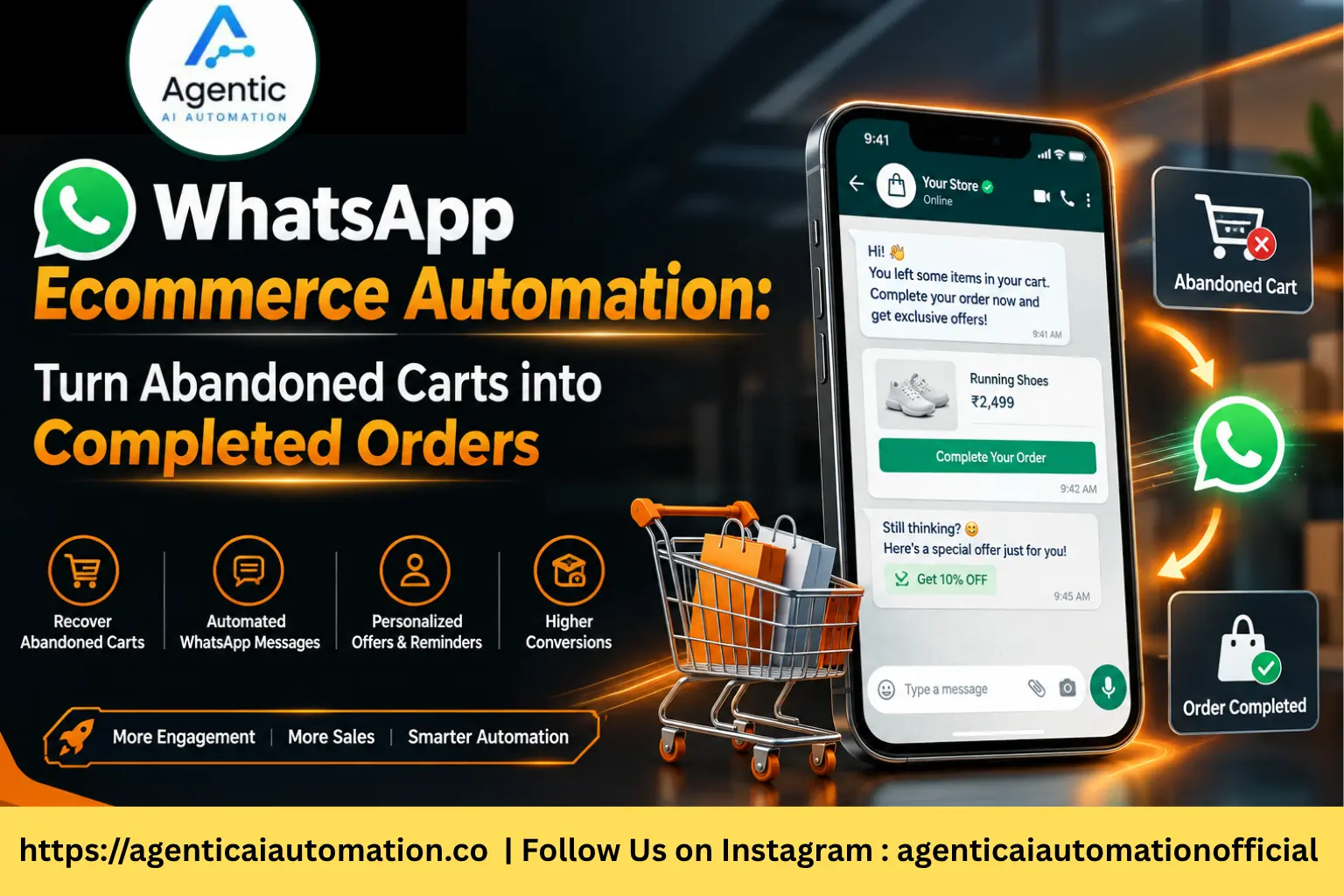
From Checkout Drop-Offs to Completed Orders with WhatsApp Ecommerce Automation
A customer lands on your online store. They browse, they compare, they finally find the product they like, and they add it to the cart. Everything looks perfect — right up until the payment page loads. And then, for reasons you'll probably never know, they just... leave.
No warning. No message. Just products sitting in a customer’s cart, left unattended while a potential sale slips away. If you run an online store, this scene plays out dozens of times a day, and it's one of the most frustrating parts of the job. Most sellers accept it as the cost of doing business online. But what if that abandoned cart wasn't actually the end of the story?
This is exactly where WhatsApp Ecommerce Automation changes the outcome. Instead of losing the sale silently, an automated system notices the abandoned checkout the moment it happens and sends the customer a friendly, personalized message — on the one app almost everyone already has open: WhatsApp.
How the Recovery Actually Happens
Picture the same customer from before. They close the tab without paying. Within a few minutes, their phone buzzes with a WhatsApp message: a small discount, a gentle reminder, maybe a direct link back to their cart with everything still saved. Something like, “We noticed you left something behind — complete your order now and get an extra discount.”
Suddenly the decision feels a lot easier. The customer didn't have to search their inbox for a forgotten promo code or go hunting for the product again. The offer showed up exactly where they were already paying attention, and within a minute they're back on the site, completing payment. That's the entire loop — no manual follow-up, no sales team chasing leads one by one, just a well-timed nudge that turns hesitation into a confirmed order.
Why WhatsApp Works Better Than Email or SMS
Most shoppers ignore abandoned-cart emails. They get buried under promotions, newsletters, and spam. SMS is a little better, but it feels transactional and cold. WhatsApp sits in a different space entirely — it's where people talk to friends and family, which means messages get opened almost instantly and feel far more personal than a generic email blast.
Because of that, businesses using automation on this channel tend to see noticeably higher open and reply rates compared to older recovery methods. The message doesn't feel like an ad. It feels like a helpful reminder from a brand that's actually paying attention.
What Good Automation Looks Like in Practice
A well-built cart-recovery flow usually follows a simple rhythm. The first message goes out within minutes, just a friendly nudge with a link back to the cart. If there's no response, a second message follows a few hours later, sometimes with a small incentive like a limited-time discount. If that still doesn't work, a final reminder goes out the next day, often with a slightly stronger offer or a note that the items may sell out soon.
None of this requires a human to sit and type out messages one at a time. The system tracks the checkout, waits for the right moment, and sends the message automatically — all while staying within WhatsApp's messaging guidelines so the brand never comes across as spammy.
Beyond Cart Recovery
Recovering abandoned carts is often the first thing store owners try, but it's rarely the last. Once the same automation is in place, it can send order confirmations, shipping updates, delivery alerts, and even post-purchase check-ins — all through the same familiar chat window. Customers stop worrying about missing an email and start trusting that updates will simply show up where they already are.
The Bottom Line
Every abandoned cart isn't necessarily a lost sale — it's often just an unfinished conversation. WhatsApp Automation gives online stores a way to pick that conversation back up, at exactly the right moment, without adding extra work for the team behind the scenes. For a small setup effort, the payoff is real: more completed orders, better customer experience, and a lot fewer sales quietly slipping away.
If checkout drop-offs have been costing your store money month after month, this is one of the simplest changes you can make — and one of the few that starts paying for itself almost immediately.